

ExoPTEN: Optic Nerve Damage
Exploring the regenerative potential of ExoPTEN following optic nerve injury
The Unmet Medical Need
Damage to the optic nerve can lead to permanent vision loss because injured retinal ganglion cell axons have a limited natural capacity to regenerate. Current treatments for conditions such as glaucoma primarily aim to slow or prevent further damage, but they do not regenerate damaged nerve fibers or restore function that has already been lost.
NurExone is advancing ExoPTEN, its lead exosome-based therapeutic candidate, as a potential regenerative therapy for optic nerve injury.
Encouraging Preclinical Results in Optic Nerve Study
In collaboration with researchers at the Goldschleger Eye Institute at Sheba Medical Center, ExoPTEN has been evaluated in preclinical studies in rats using an optic nerve crush model. This well-established model creates a defined injury to the optic nerve and allows researchers to assess whether a treatment can help protect nerve cells, preserve optic nerve structure and support the return of measurable retinal function.
Across these studies, ExoPTEN demonstrated encouraging functional and structural effects following optic nerve injury. Compared with untreated controls, treated animals showed measurable retinal activity, greater preservation of retinal ganglion cells and evidence of improved optic nerve structure.
Together, these findings support the continued evaluation of ExoPTEN as a potential regenerative therapy for optic nerve damage.

Presented at ARVO 2025
Results from the optic nerve program were presented at the 2025 Annual Meeting of the Association for Research in Vision and Ophthalmology, a leading international vision-research conference.
The expanded study reported measurable recovery of retinal activity together with preservation of retinal ganglion cells and improved optic nerve structure following ExoPTEN treatment.
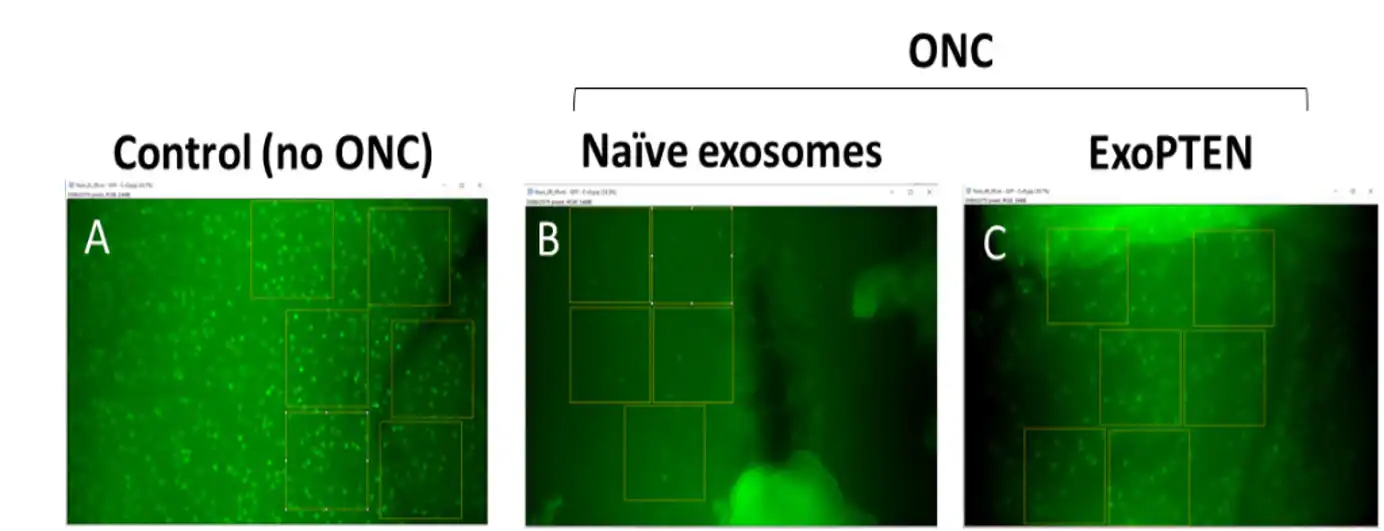
A– uninjured eye B– exosome-treated eye C-ExoPTEN-treated eye following optic nerve injury.
- Minimally invasive treatment showed functional restoration of damaged optic nerve to healthy levels in animals which led to 75% functional recovery.
- Optic Nerve Crush (ONC) – A well-established preclinical model used to study what happens when the connection between the eye and the brain is suddenly damaged. It allows researchers to evaluate whether a treatment can protect surviving nerve cells, support regeneration and help restore measurable function after injury. The model addresses a central challenge in glaucoma and other optic nerve disorders: the damaged optic nerve’s limited ability to repair itself.
Multi-billion Dollar Market
Optic nerve damage is a major cause of irreversible vision loss. In glaucoma and other optic nerve disorders, current treatments may help slow further deterioration, but they do not recover neural function that has already been lost.
That leaves a major therapeutic gap and a compelling opportunity for regenerative approaches designed to protect retinal ganglion cells, support optic nerve repair and preserve or restore measurable function after injury.
With a global ophthalmology market valued in the billions of dollars and the burden of glaucoma and optic neuropathies rising as populations age, ExoPTEN could, if successfully translated to humans, open a new treatment frontier: moving beyond damage control toward neural repair.
Estimated Global Market for Vision Preserving Acute Glaucoma Therapies
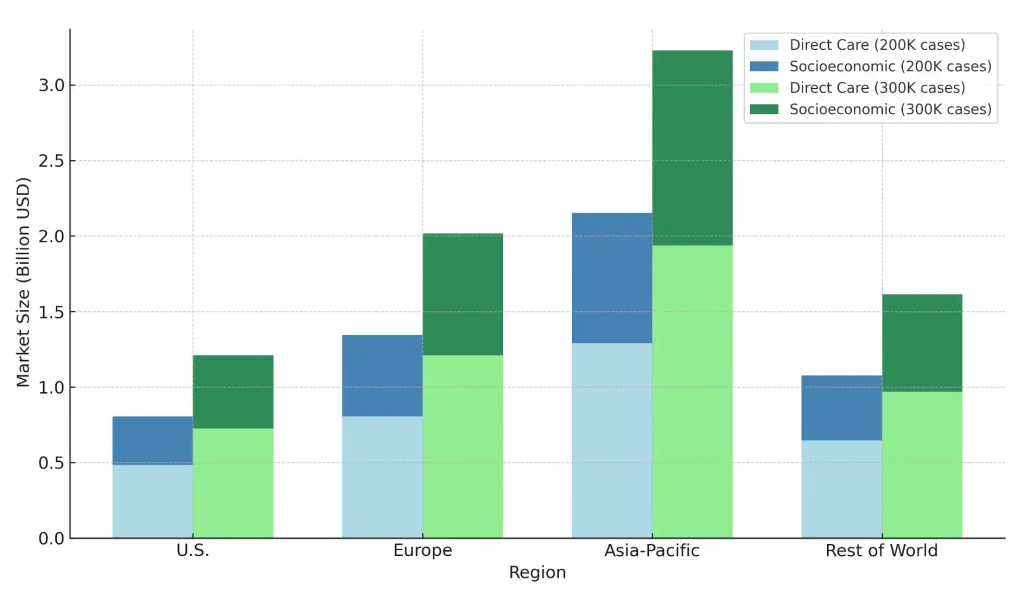
Socioeconomic represents indirect costs including lost productivity, assistive services and mobility, quality of life reductions.
References:
1. Chan et al., 2022
2. Wittenborn & Rein, 2021