

Preclinical Evidence of Regeneration and Functional Recovery
ExoPTEN has shown promising preclinical results across a number of different laboratory models and studies of acute spinal cord injury. In early studies, a short intranasal treatment cycle was associated with nerve regeneration, neural regrowth, and recovery of key functions, including movement, sensation, and bladder control (see video).
Additional dose-ranging studies using objective gait analysis demonstrated dose-dependent improvements in walking quality, balance, coordination, and weight-bearing, supporting the continued development of ExoPTEN as a potential regenerative therapy for acute spinal cord injury.
75% of ExoPTEN-treated animals recovered assessed motor, sensory and bladder functions following a short intranasal treatment cycle.
Control Group
Treated With ExoPTEN
Designed for Recovery
ExoPTEN is being developed to help the injured nervous system do what it struggles to do on its own: repair, reconnect and recover meaningful function after traumatic injury. Its minimally invasive administration is intended to make treatment practical during the critical period following injury.
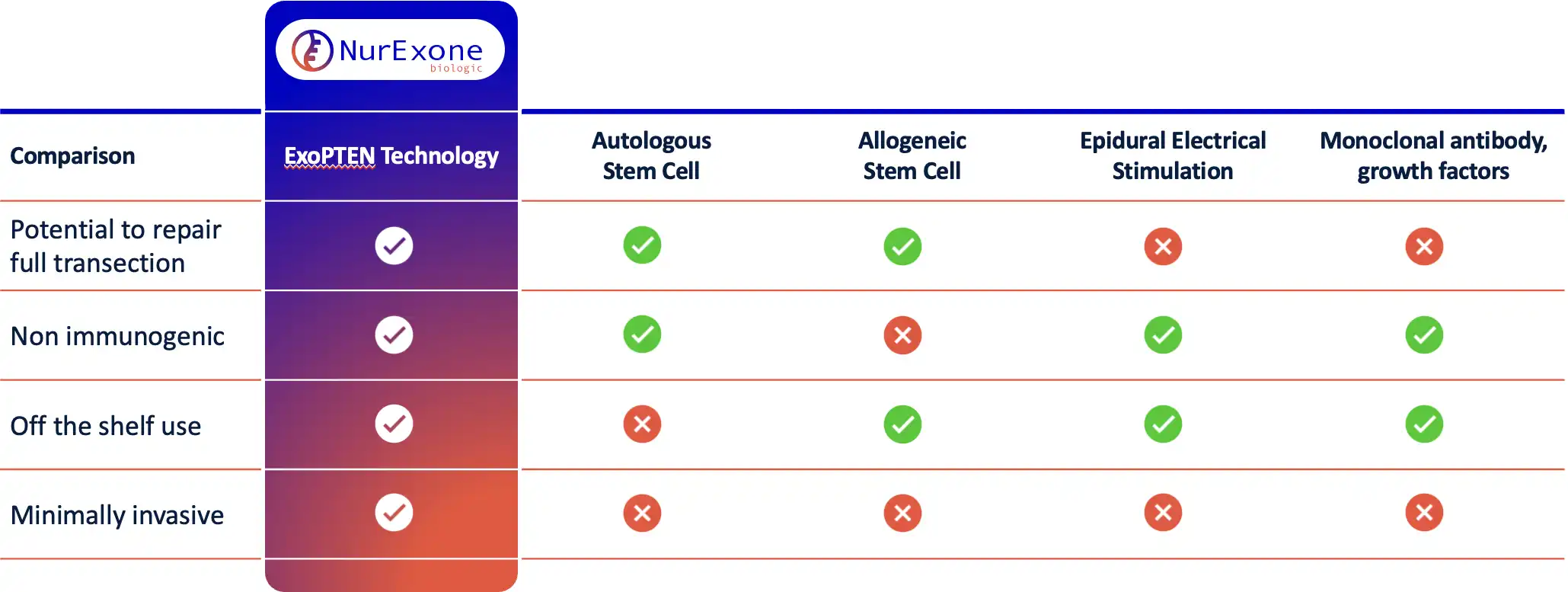
How is ExoPTEN Different?
ExoPTEN Compared with Other Approaches Under Development for Acute Spinal Cord Injury
Spinal cord injury disrupts the neural connections that carry signals between the brain and the body. Current care can stabilize the injury, prevent further damage and support rehabilitation, but it cannot reliably rebuild lost connections. A regenerative approach is therefore essential to the goal of meaningful functional recovery. ExoPTEN is designed to support that process by promoting neural repair through a minimally invasive, cell-free treatment.
Lifelong Human and Healthcare Burden
Traumatic Spinal Cord Injury
ExoPTEN is being developed for patients who have recently suffered an acute spinal cord injury, e.g., vehicle, work, sports-related injuries.
Globally, an estimated 250,000–500,000 people suffer from spinal cord injuries (SCIs) annually, with 90% of these injuries stemming from traumatic causes such as vehicle accidents, workplace incidents, or sports-related mishaps. In the United States alone, this accounts for approximately 18,000 new trauma cases per year, while in Europe, there are around 10,000 new cases annually. These figures highlight a substantial annual population of newly injured patients and a significant unmet need for therapies aimed at improving recovery after acute spinal cord injury.
The financial impact extends far beyond emergency care and rehabilitation. Severe spinal cord injury can require lifelong medical support, assistive equipment, home modifications and daily caregiving, while also affecting independence, employment and family life. In the United States, estimated lifetime healthcare and living expenses can reach approximately $5.4 million for a person injured at age 25 with high tetraplegia, excluding lost wages and productivity.

Spinal cord injury care – ~90% of new cases each year are from trauma